
Investor Hub
The Small Habits That Keep a Portfolio From Becoming a Second Job
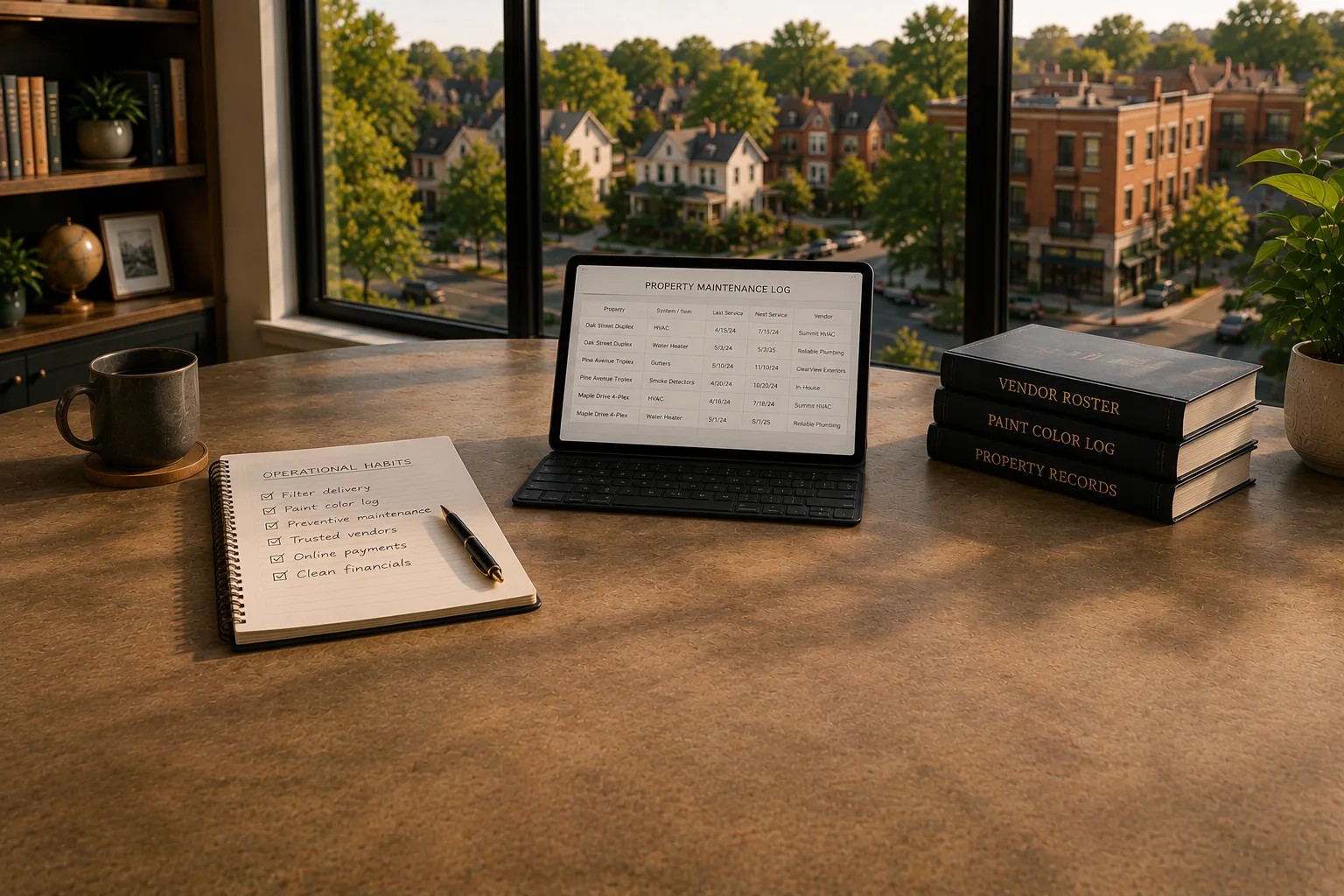
Nobody writes a course on quarterly furnace filters or paint color codes — they're not glamorous enough. But these are the operational habits that quietly save real money and real headaches over the life of a portfolio. Here's what we've learned running properties through enough cycles to know where the friction lives.
Tools & Vendors We Reference
Practical resources mentioned in these tips:
- Subscription delivery (e.g., Amazon Subscribe & Save) — for recurring supplies like HVAC filters
- A simple color/paint log — a spreadsheet or notes app is enough; the discipline matters more than the tool
- Online rent payment + maintenance-request tools — reduce friction for tenants and catch issues early
- A trusted local vendor roster — plumber, electrician, HVAC, handyman, lined up before you need them
The difference between a portfolio that runs smoothly and one that feels like a second job rarely comes down to the big decisions. It comes down to dozens of small operational habits — the kind nobody teaches because they're too unglamorous to build a seminar around. A $15 filter sent automatically prevents a $4,000 HVAC failure. A paint color logged in a spreadsheet turns a $2,000 repaint into a $40 touch-up. None of these are clever. All of them compound. This is a living collection of the operational habits we've found genuinely worth the effort — and we add to it over time.
Property Setup
Quarterly HVAC filter auto-delivery.
Set tenants up with quarterly furnace/AC filters auto-delivered through a subscription service like Amazon Subscribe & Save. A clogged filter is the single most common cause of HVAC failure, and the fix costs a few dollars a quarter versus a few thousand for a burned-out system. Tenants rarely buy filters on their own; remove the friction and the system lasts.
Log a paint color code for every property.
Keep a simple record — property, room, paint brand, color name, and code — the moment a unit is painted. When a wall needs a touch-up between tenants, you (or a contractor) match it exactly instead of repainting the whole room. Over a portfolio and many turnovers, this turns thousands of dollars of unnecessary repaints into minor touch-ups.
Maintenance
Catch small problems before they become damage.
A dripping valve, a slow leak, a loose flashing — handled early, these are cheap. Ignored, they become water damage, mold, and unhappy tenants who leave. Build a habit of fast response to small reports; it's almost always cheaper than the alternative.
Vendor Management
Build vendor relationships before you need them.
The time to find a reliable plumber, electrician, and handyman is not at 9 p.m. when a pipe bursts. Line up trusted vendors while things are calm, and treat them well so they pick up when you call. A good vendor roster is one of the most undervalued assets an operator has.
Tenant Relations
Make paying rent and reporting problems frictionless.
The easier you make it to pay rent and report maintenance, the more reliably both happen. Online payment and a simple way to log issues reduce late payments and catch small problems early. Friction is the enemy of good operations on both sides.
Financial Hygiene
Keep property finances cleanly separated.
Run each property's (or entity's) income and expenses through its own clean records from day one. It makes your proforma reviews honest, your tax filing far easier, and your portfolio's real performance visible. Commingled, sloppy books hide problems until they're expensive.
Most of what's here is operator-to-operator experience, not regulated advice — practical habits you can put in place yourself. A few brush up against rules: whether a given expense is a deductible repair or a capital improvement is an IRS question (see How to Read a Real Estate Proforma and your CPA), and anything involving leases, entry, or tenant treatment is governed by landlord-tenant law. When a tip touches those edges, treat it as a starting point and confirm the specifics with the right professional.
Have a hard-won tip of your own?
This collection grows over time, and some of the best operational habits come from other investors in the trenches. If you've got a property question — or a trick worth sharing — we're always glad to talk shop.